
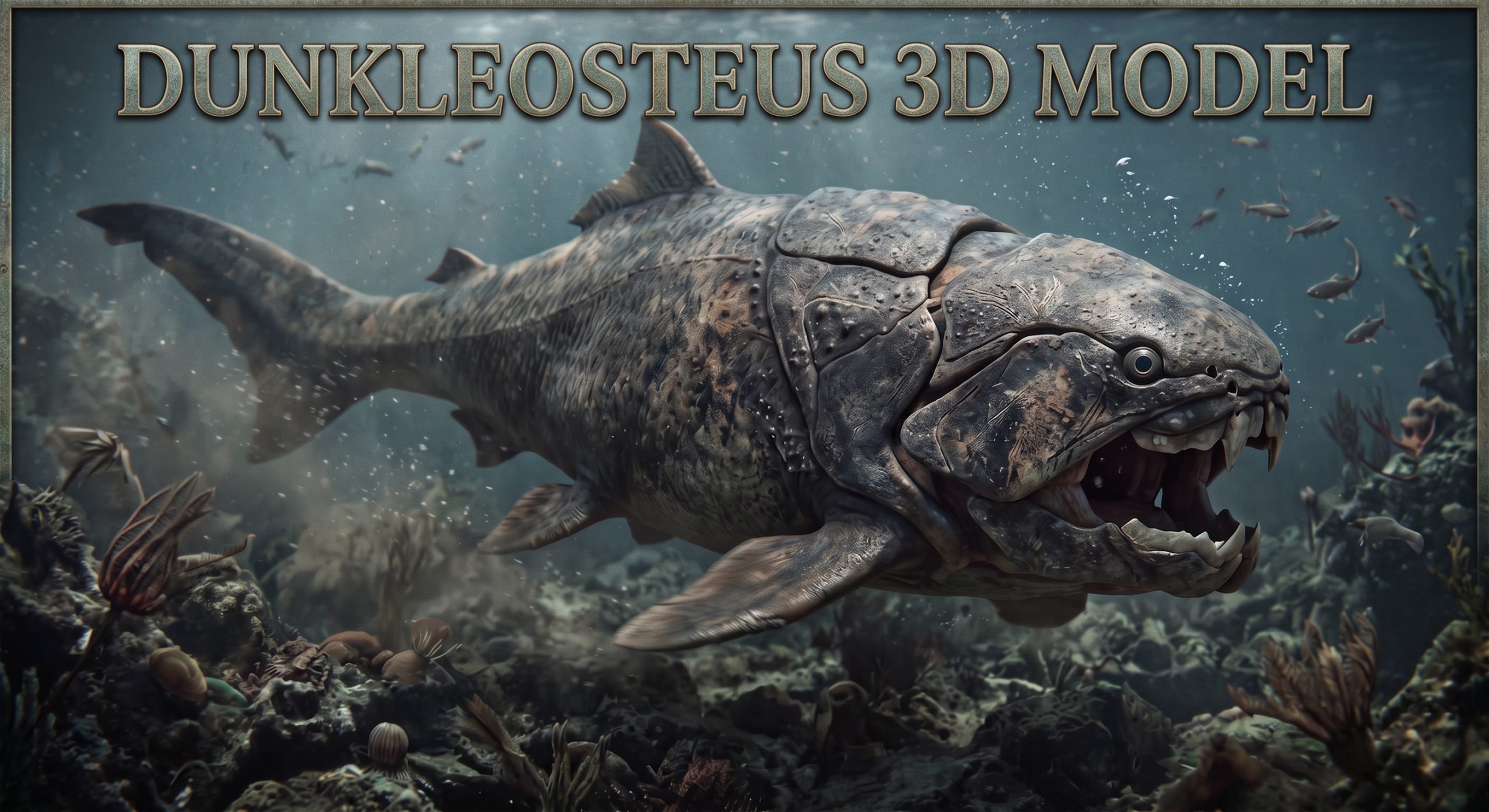
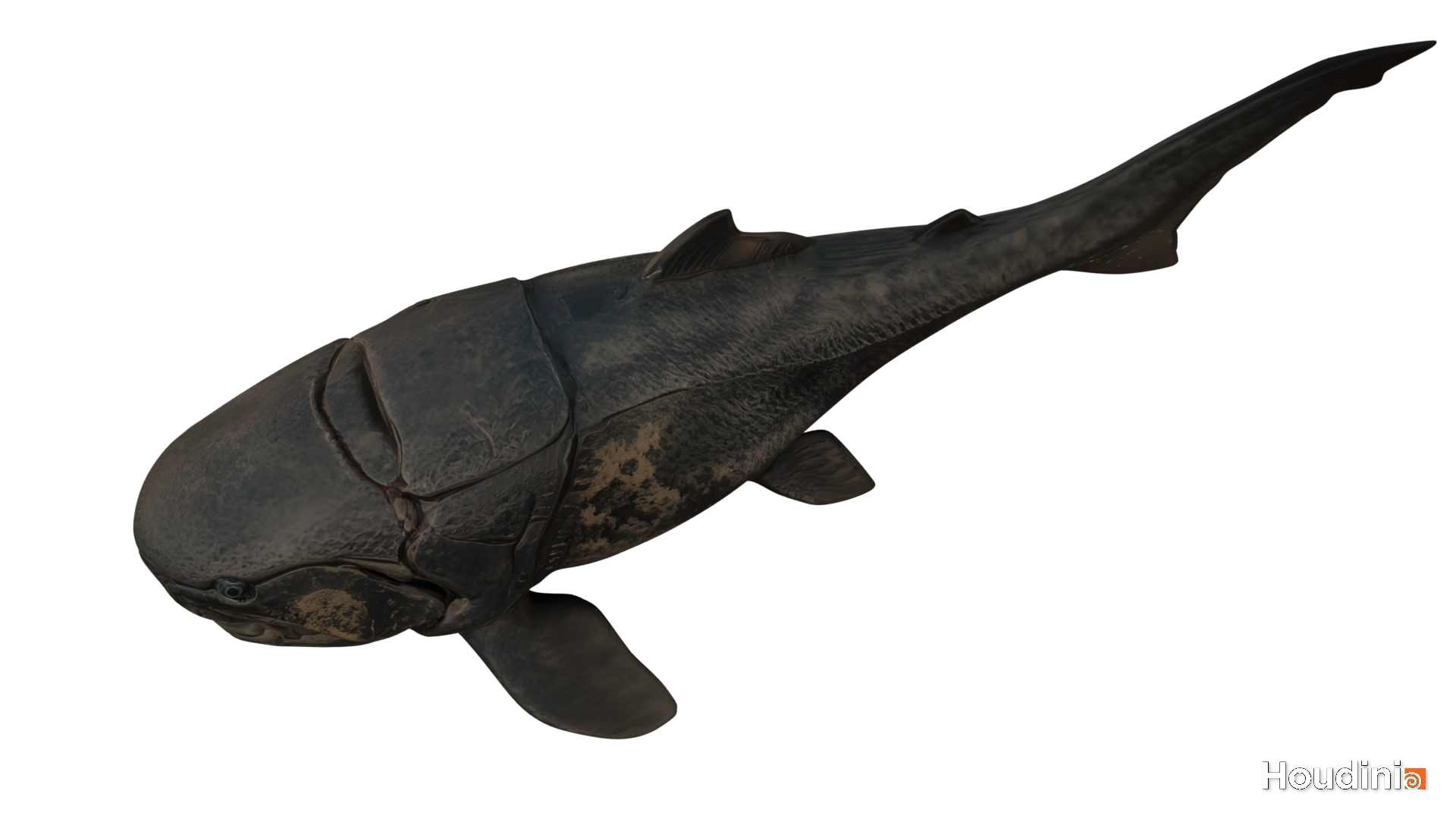
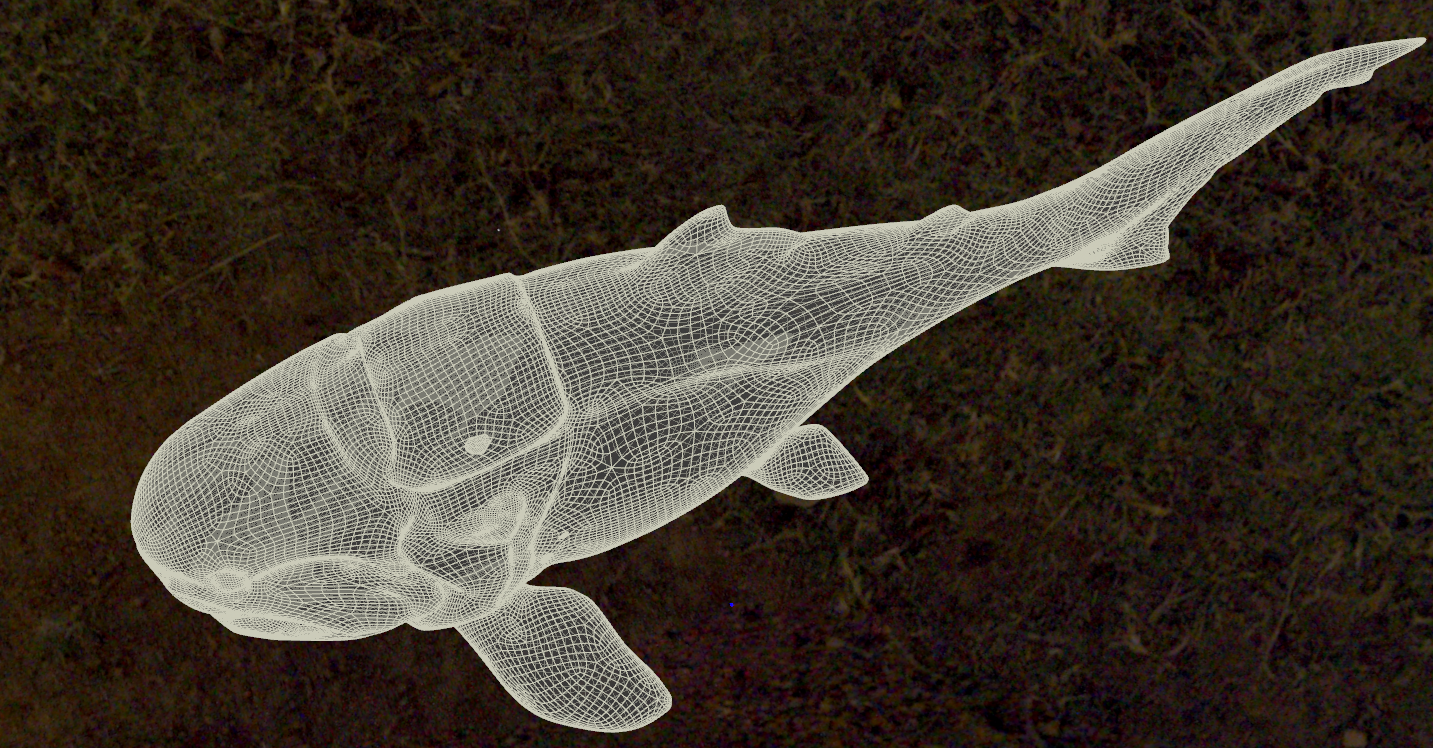
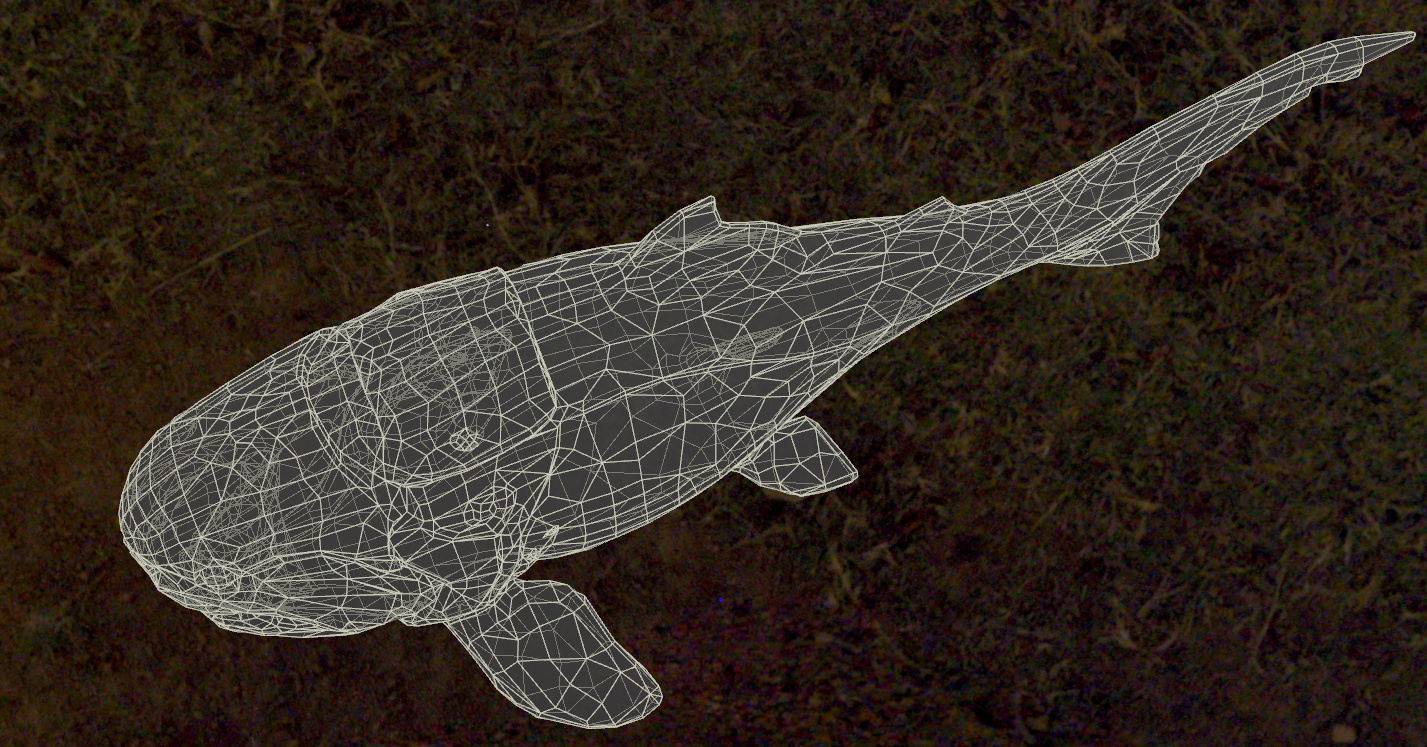
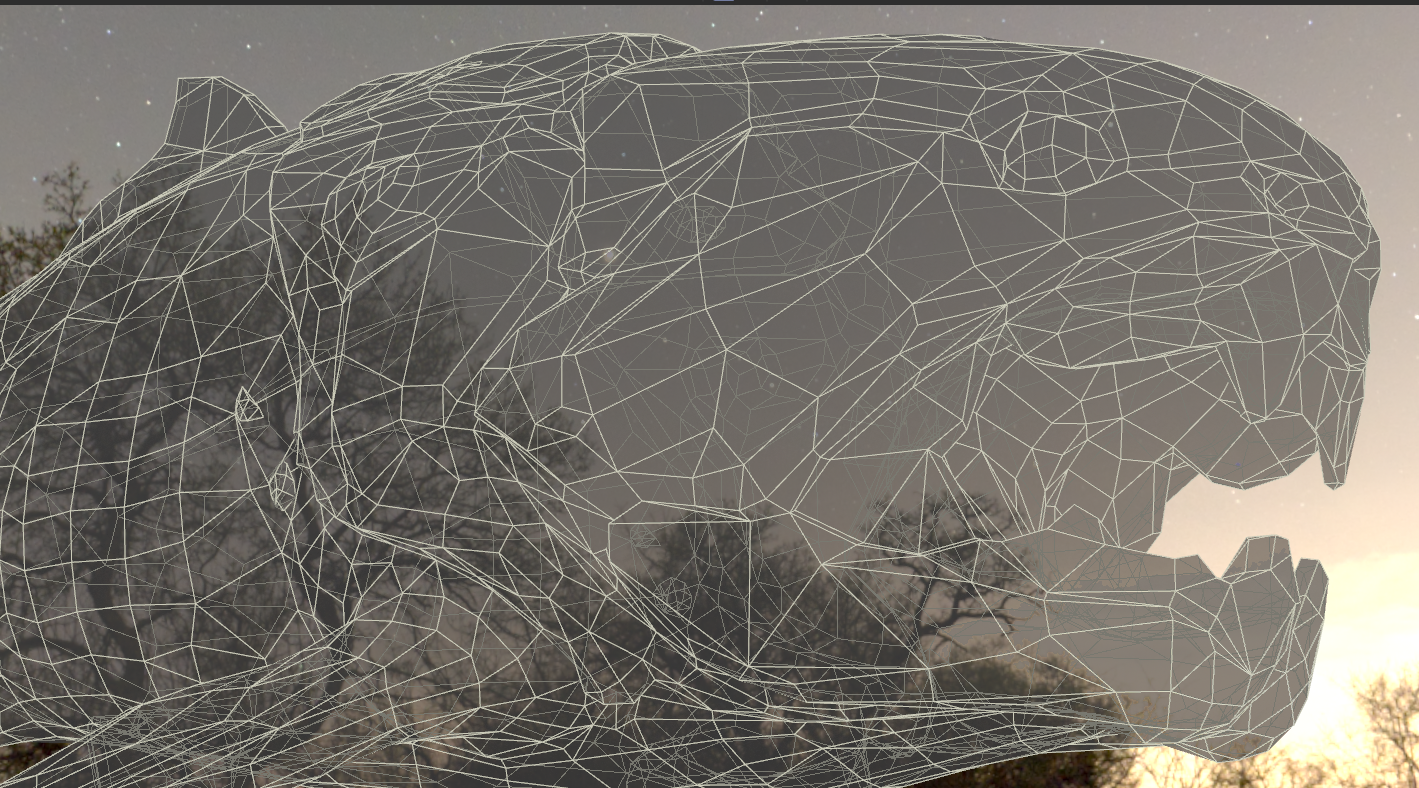
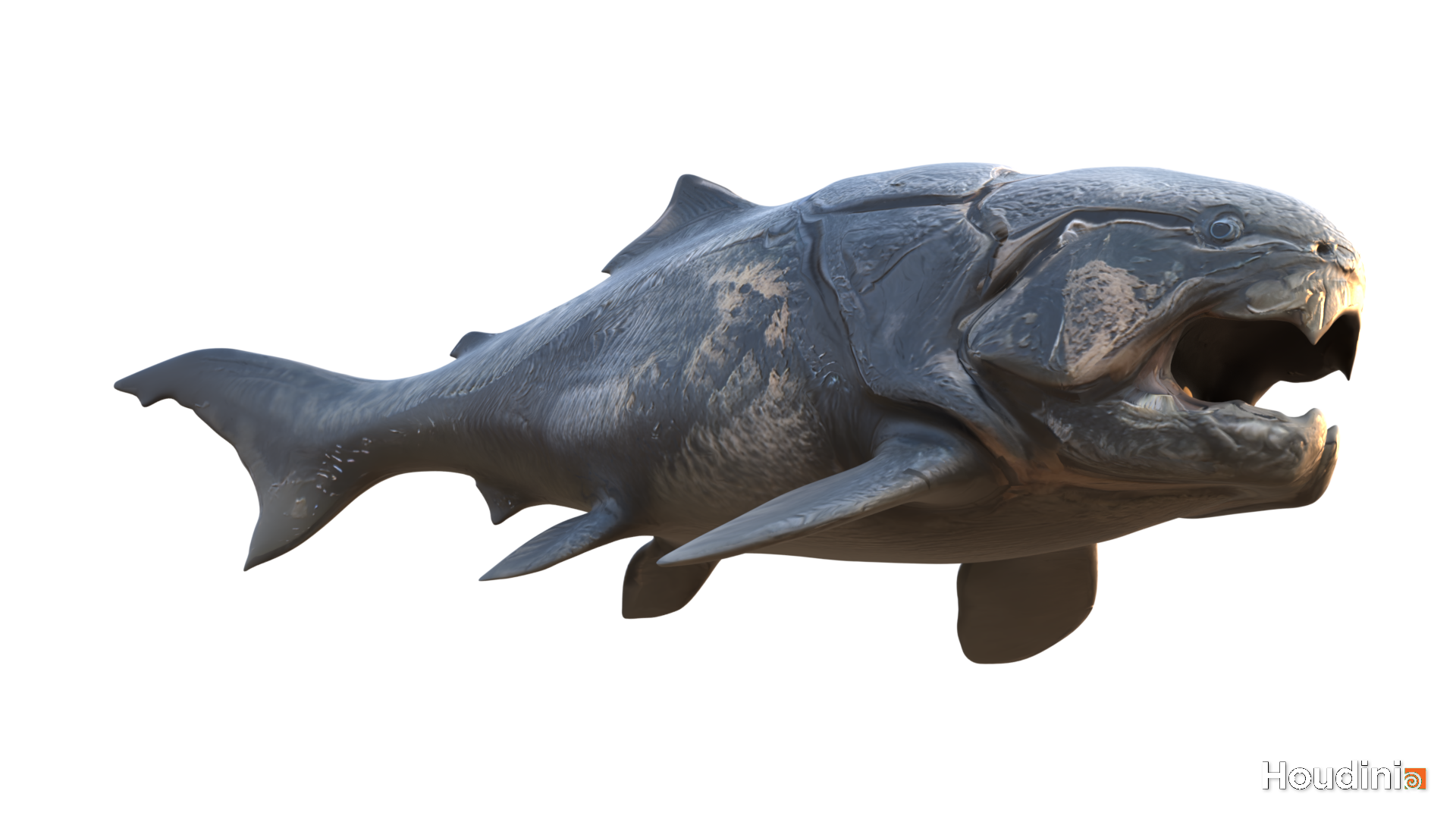
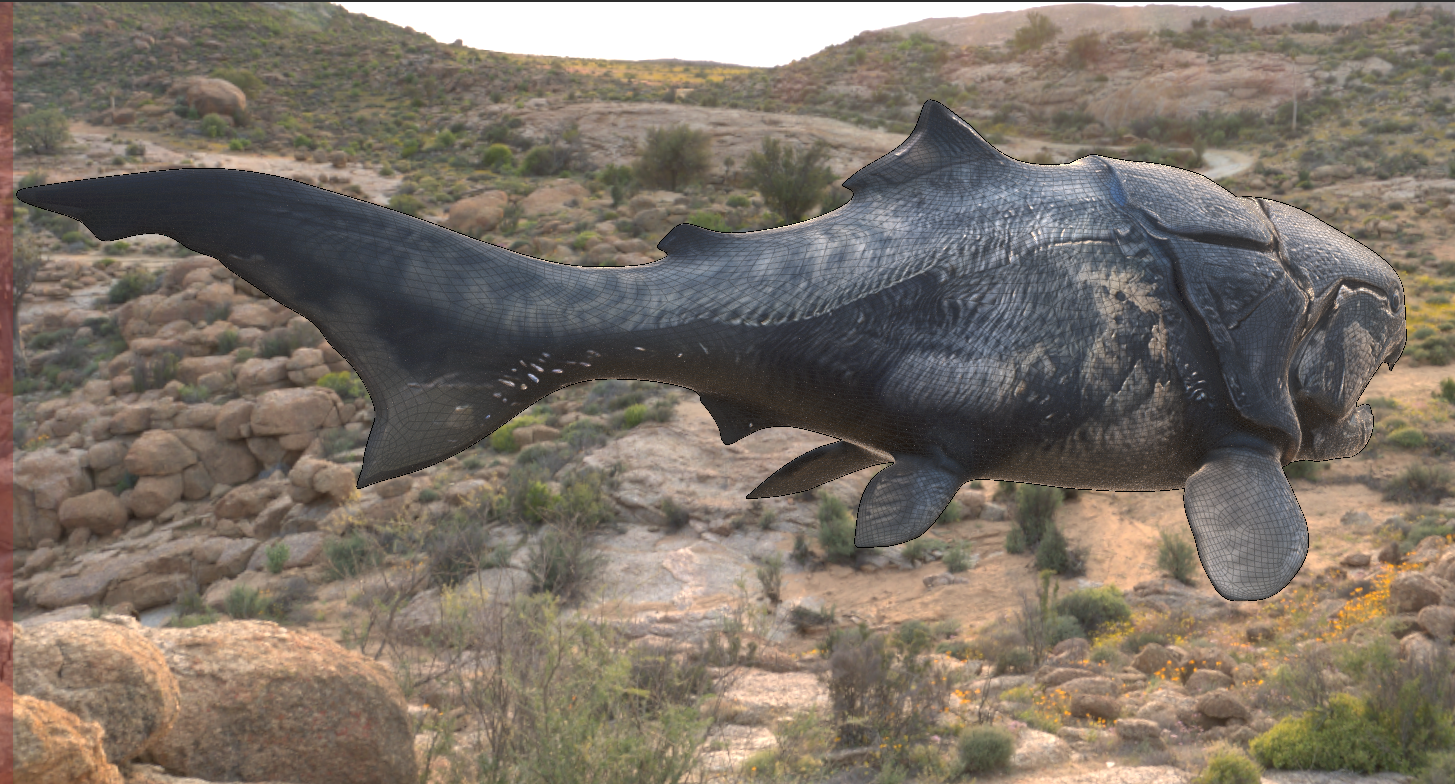
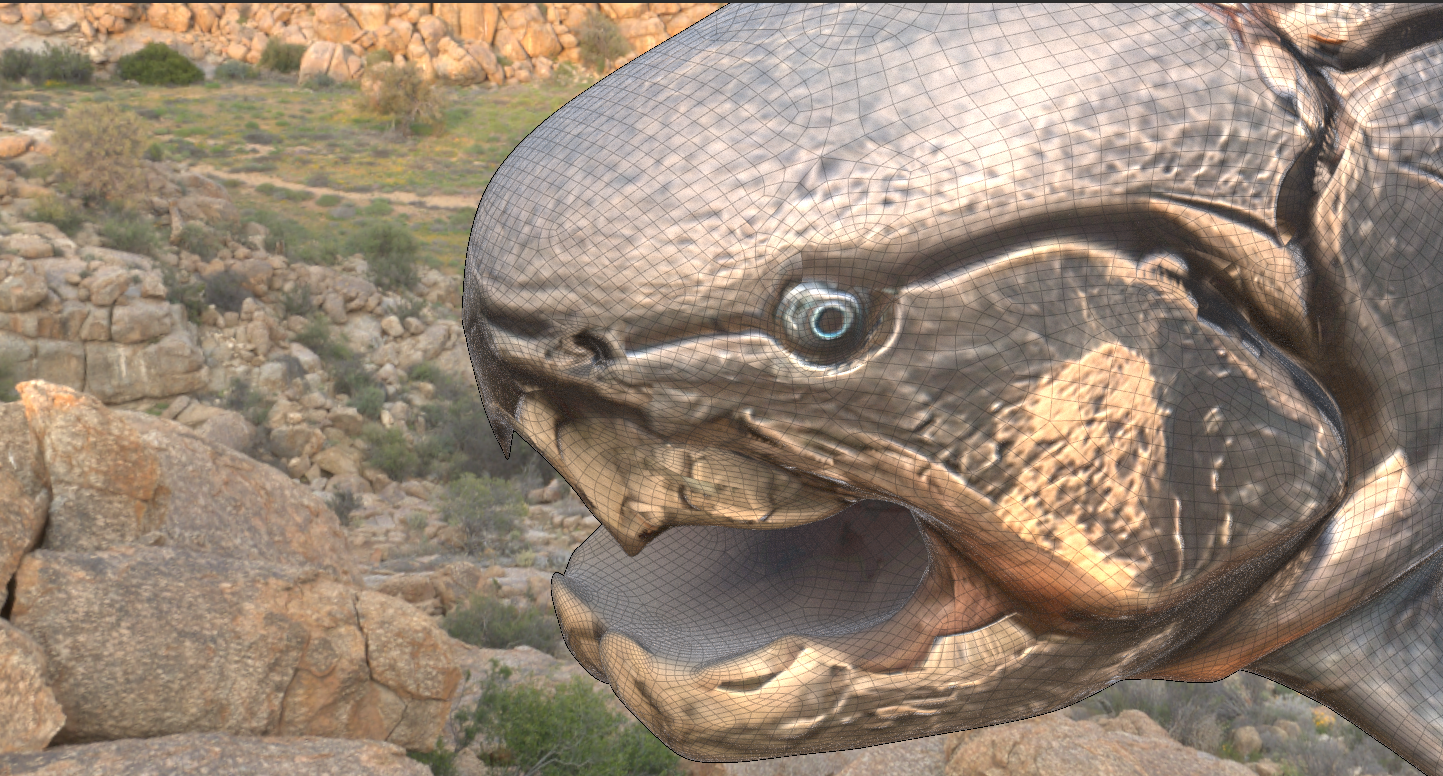
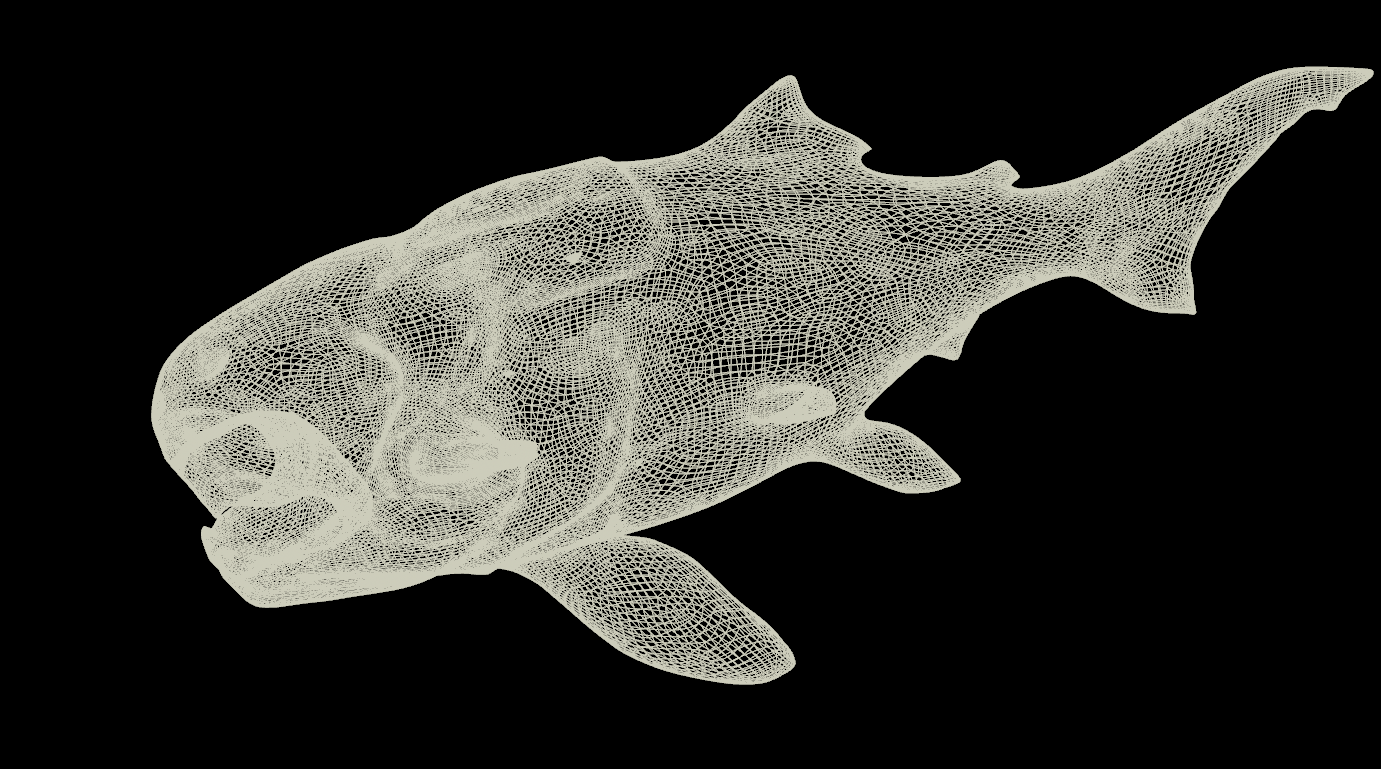
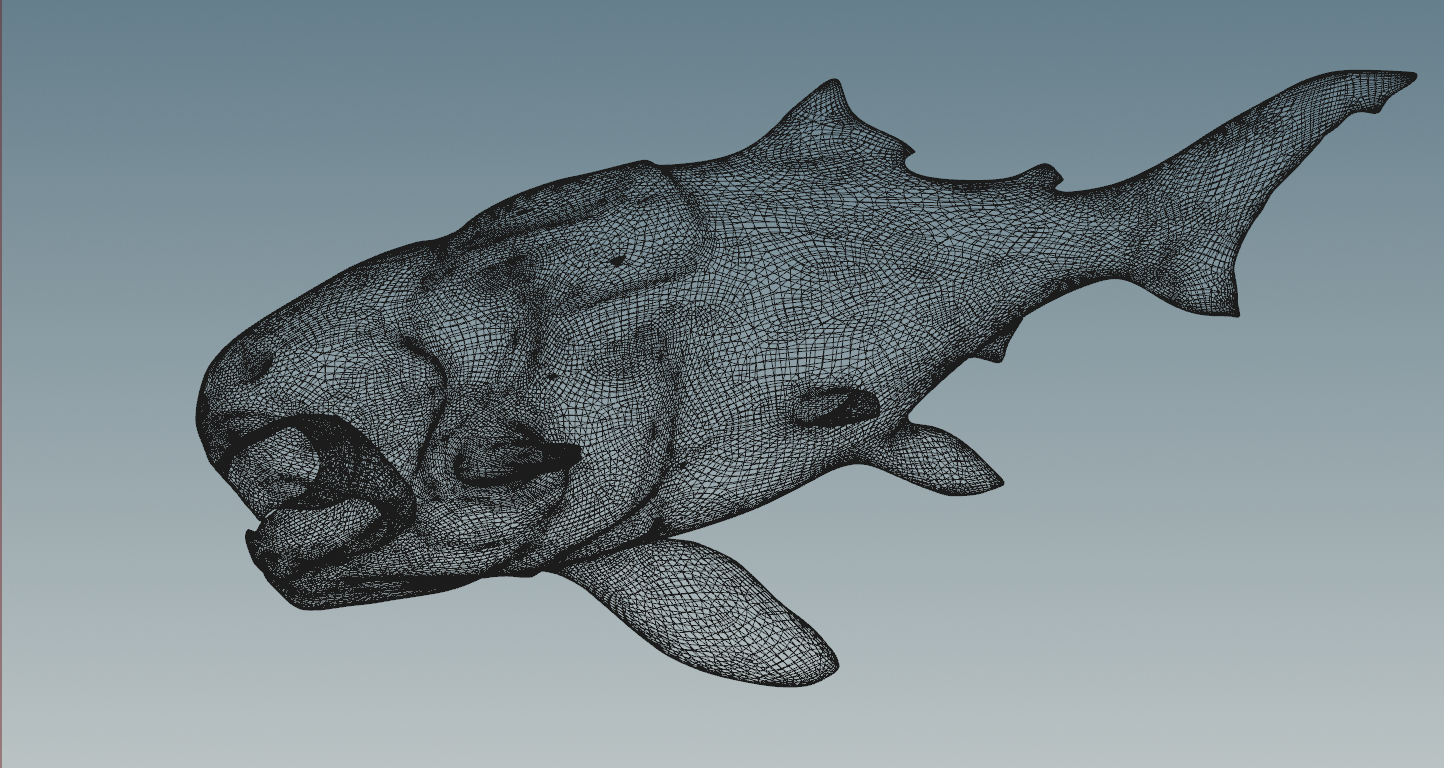
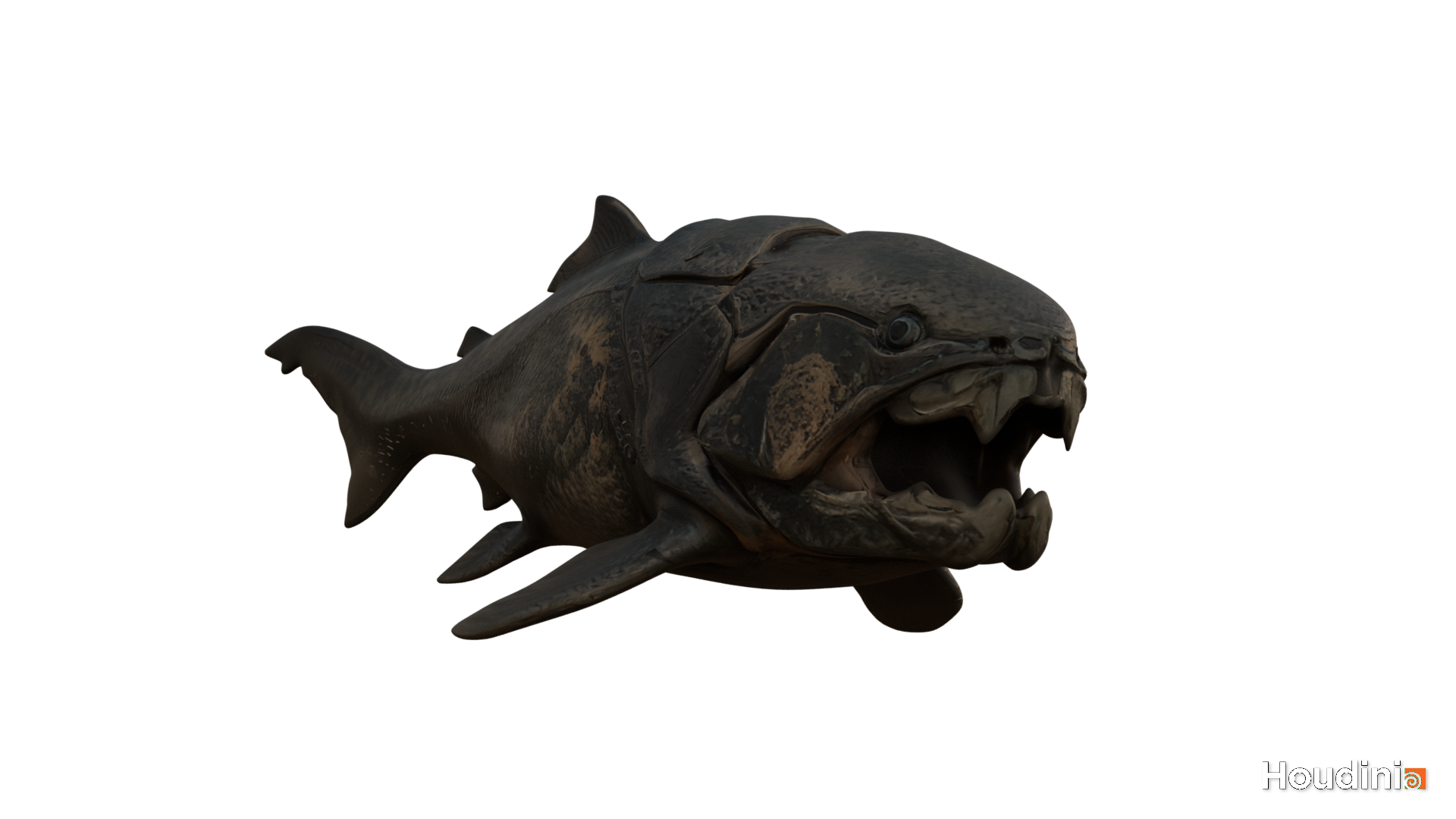
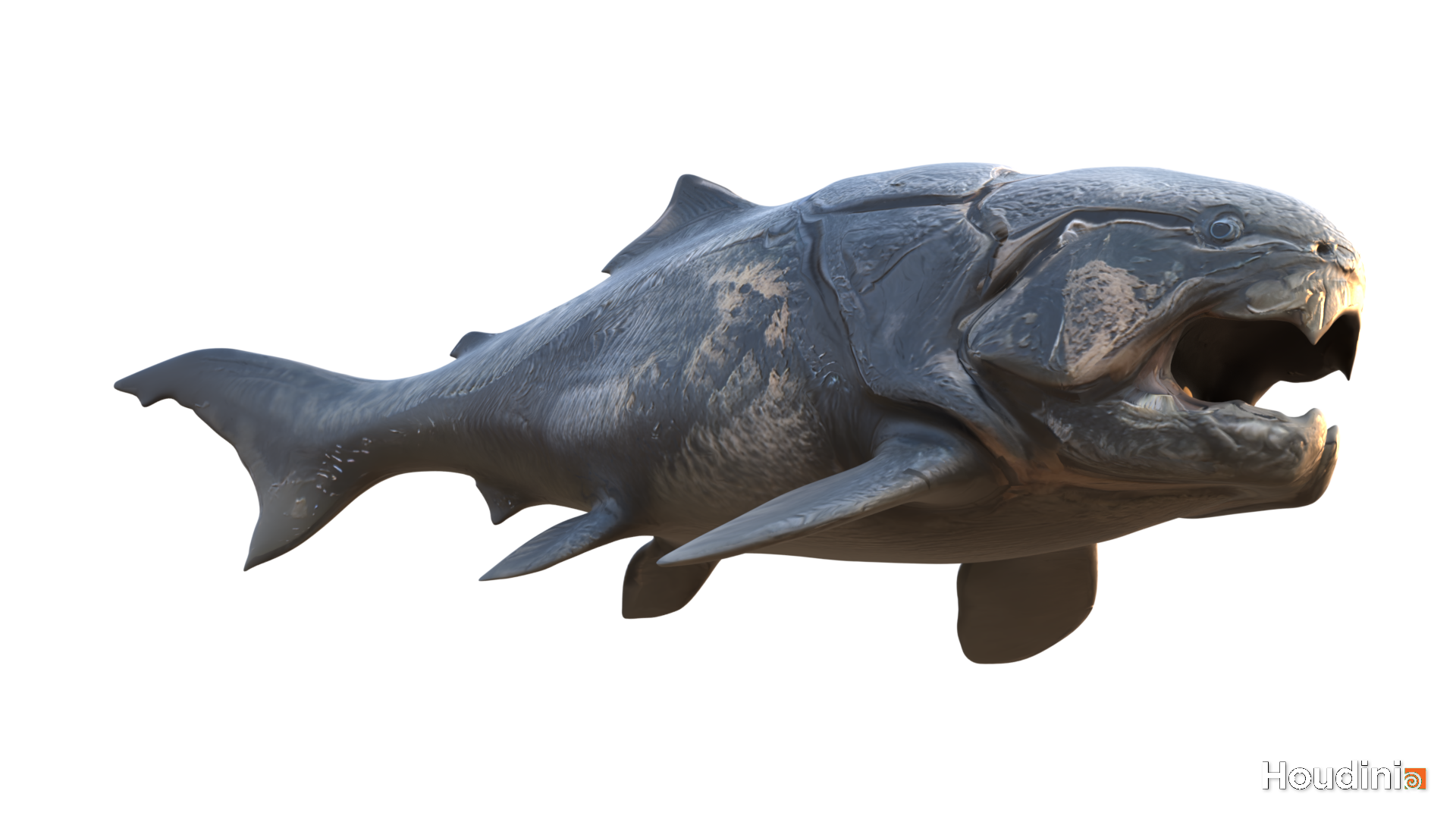
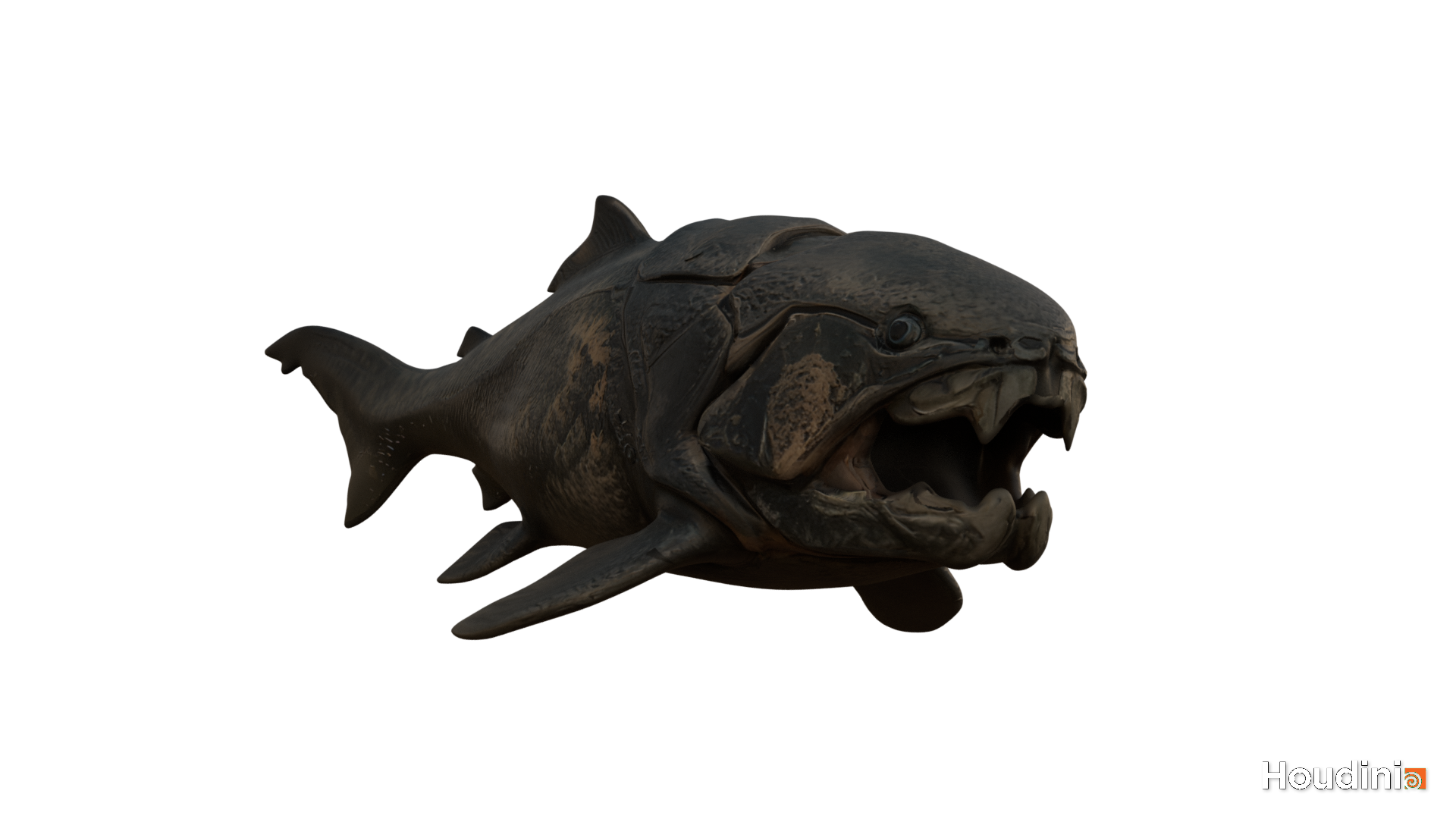
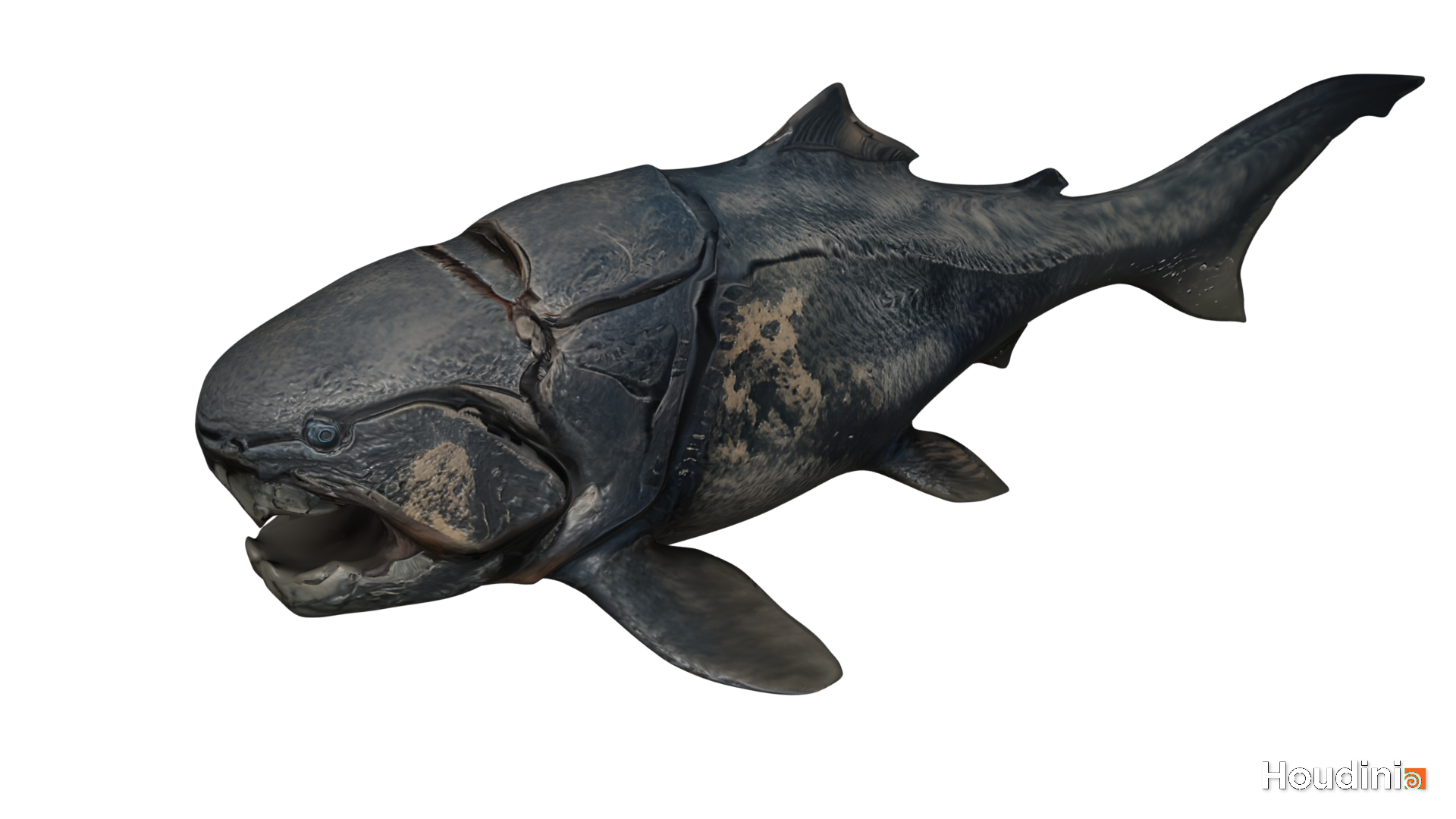
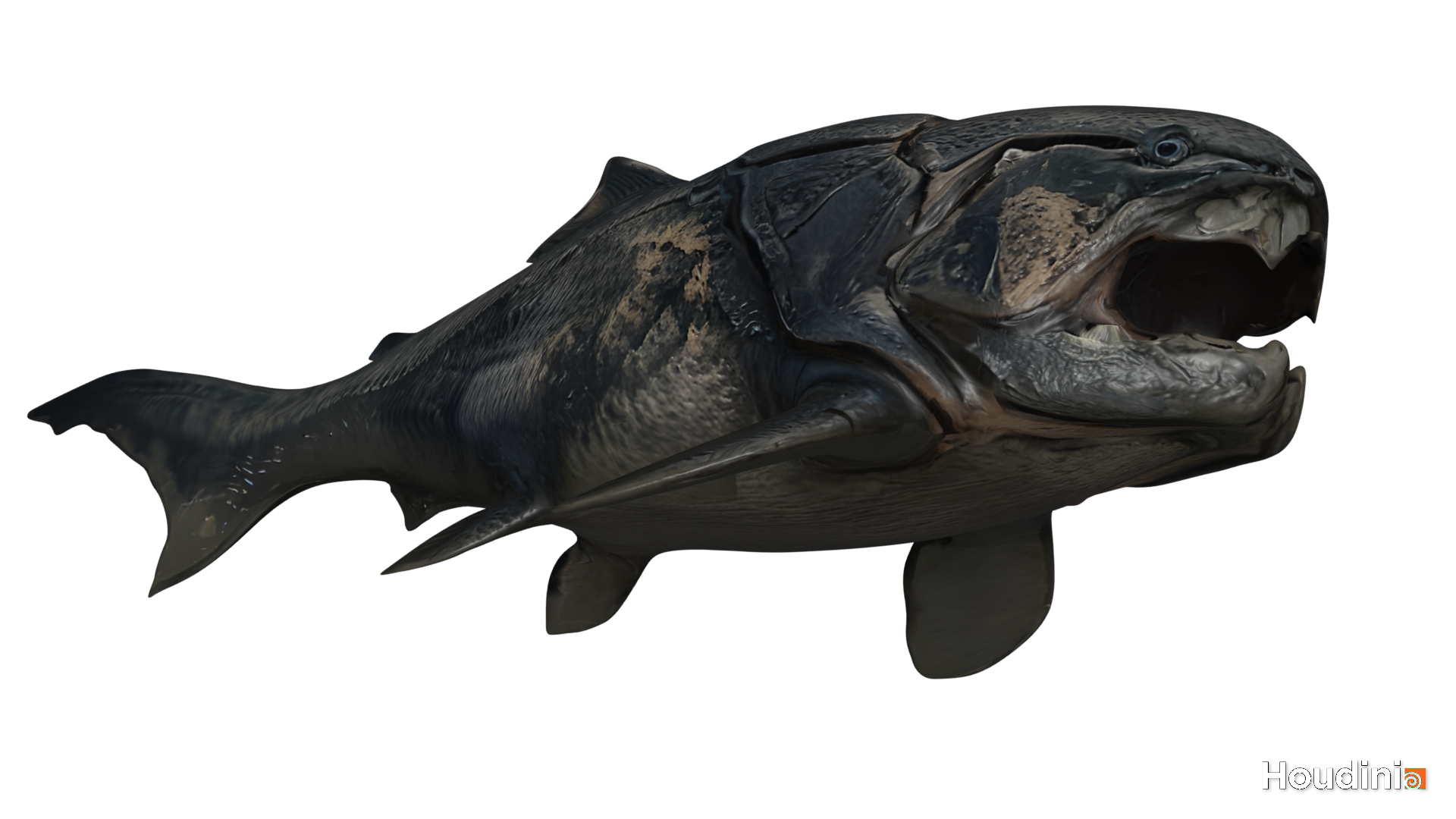
SHIPS AS READY FBX.
3327 Polygons
11836 Vertices
Texture Ready: OK
UV UNWRAPPED: OK
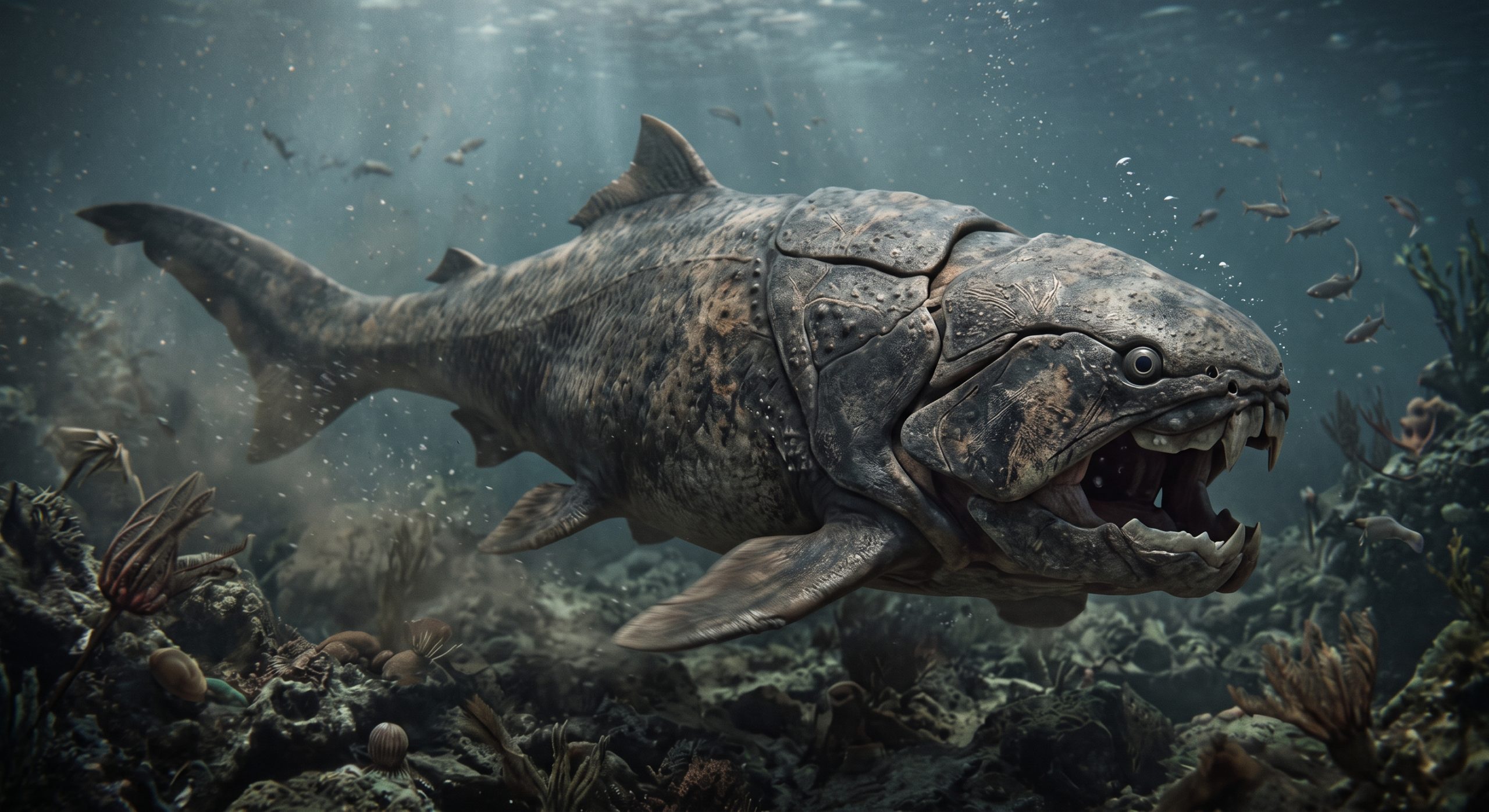
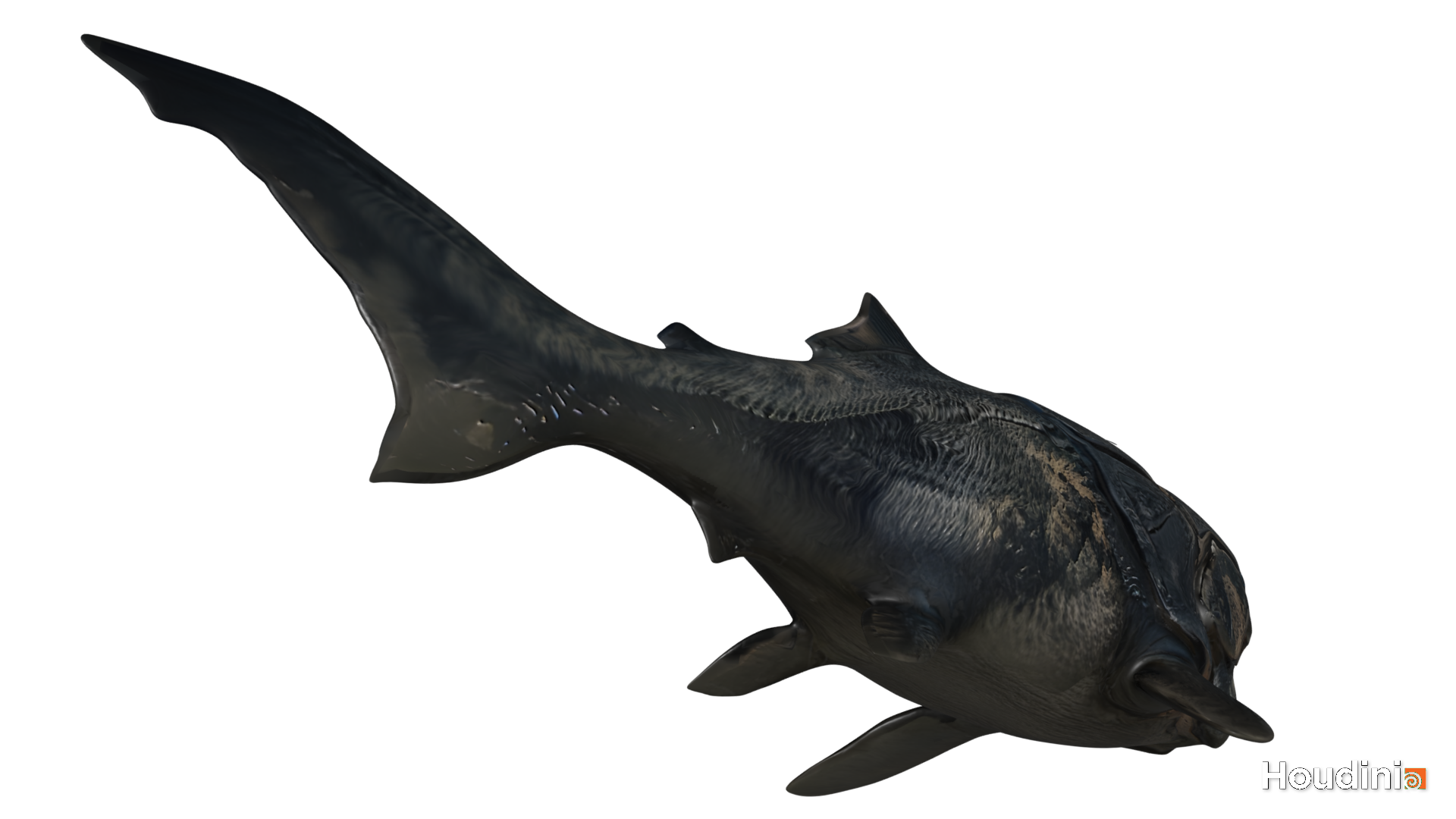
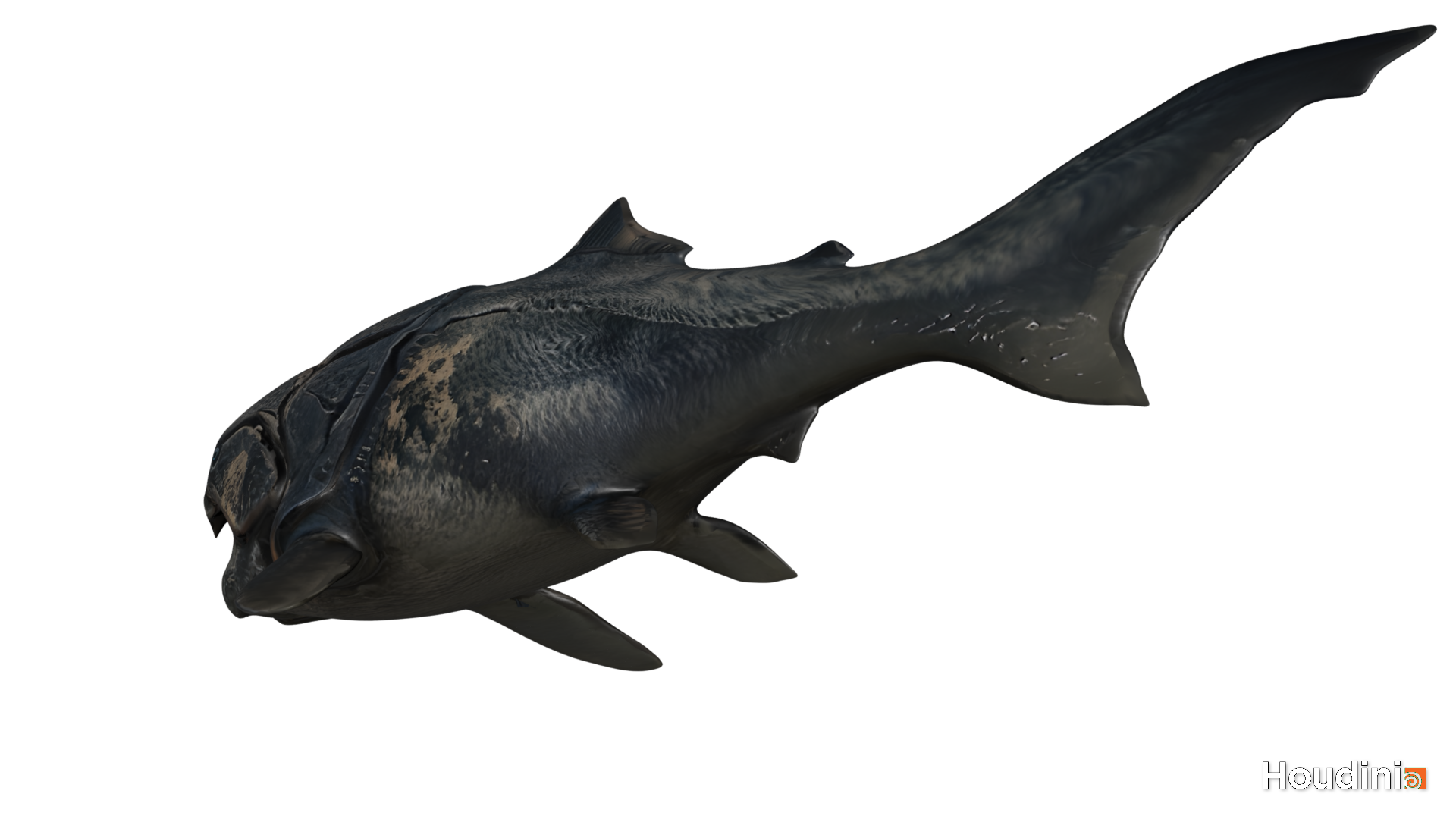
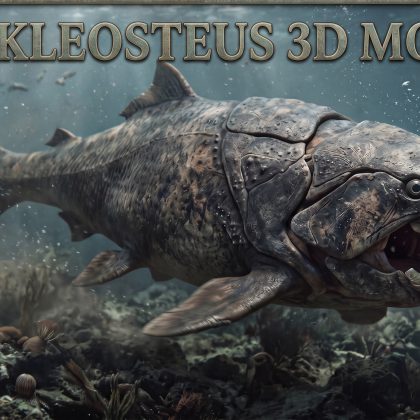
Dunkleosteus was a truly colossal, armored placoderm fish, one of the most formidable predators to ever rule the Earth’s oceans. Existing during the Late Devonian period, roughly 382 to 358 million years ago, it dominated a marine world vastly different from today’s. Imagine a creature the size of a great white shark, but encased in heavy bony plating and possessing jaws that could sheer through metal. Its name, meaning “Dunkle’s Bone,” honors American paleontologist David Dunkle.
Physical Characteristics:
-
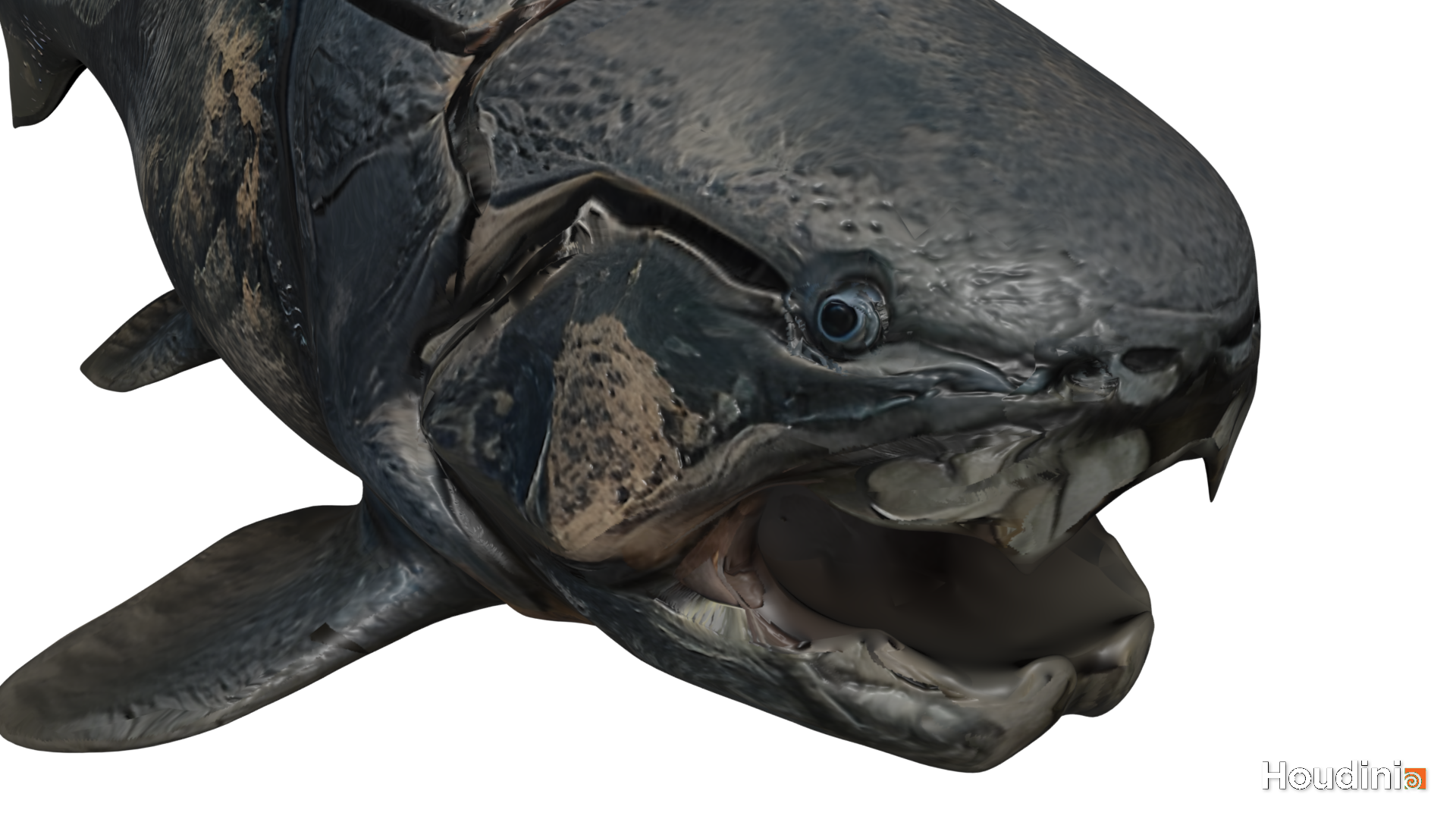
Armor-Plated Head and Thorax: The defining feature of Dunkleosteus was its massive head and thorax, covered in interlocking, thick, bony plates. This biological armor provided formidable protection and formed a rigid structure for powerful jaw muscles. The plates were patterned and often showed scars from combat and feeding.
-
Gnathal Plates instead of Teeth: Perhaps the most terrifying aspect was its jaw. It didn’t have teeth in the conventional sense. Instead, its jaws were edged with sharp, self-sharpening bony plates called gnathal plates. These worked like shears, slicing and shearing through flesh and bone with incredible force. As they wore down, new bone would grow to maintain the sharp edge.
-
Body Form: The main body and tail are mostly unknown as they were not armored and didn’t fossilize well. However, reconstructions based on related placoderms and trace fossils suggest a powerful, shark-like, fusiform body. It was likely a strong, steady swimmer rather than an extremely fast one, relying on its armor and ambush to catch prey. The powerful tail would have provided thrust, and large pectoral fins aided in maneuvering. The size has been debated, but estimates typically place the largest species, Dunkleosteus terrelli, at up to 6-8 meters (20-26 feet) in length and weighing over a ton.
Behavior and Diet:
-
Apex Predator: Dunkleosteus was at the top of the Late Devonian food chain. Its powerful jaws were capable of crushing and shearing through almost anything it encountered.
-
Cannibalistic tendencies: Paleontologists have found bite marks on the armored plates of some Dunkleosteus specimens that match the jaws of other, larger Dunkleosteus. This suggests they may have fought over territory, mates, or even preyed upon each other.
-
Diverse Diet: Its diet would have included a wide variety of marine life, including other placoderms (like small ones or even other Dunkleosteus), early sharks (which were starting to emerge), arthropods, cephalopods, and large invertebrates. It was likely a generalist predator that ate whatever was available and could fit in its maw.
-
Ambush Hunter: While not slow, its heavy armor suggests it wasn’t a sustained high-speed chase predator. It likely used its power for explosive bursts of speed to ambush prey and used its armor to overpower and shear through defensive structures. Its eyes were positioned forward and up, suggesting it may have been an ambush predator that struck from below and behind.
Ecological Context and Importance:
-
Devonian Marine Ecosystems: It existed during a pivotal time when ancient marine ecosystems were incredibly diverse and dominated by jawed vertebrates for the first time. Dunkleosteus was a key driver of this diversity, being a pressure on all other forms of life.
-
Evolutionary Context: As a placoderm, it belongs to one of the earliest and most successful groups of jawed vertebrates. Its existence and then sudden extinction (along with almost all other placoderms) are a crucial part of the story of vertebrate evolution, leading up to the rise of modern fish and land animals.
Key Points to Remember:
-
Large armored placoderm (armored fish) from the Late Devonian.
-
Apex predator with massive power.
-
Had sharp, shearing bony plates, not teeth.
-
Cannibalistic.
-
An icon of prehistory, showing how alien and dangerous the ancient world was.





Reviews
There are no reviews yet.